











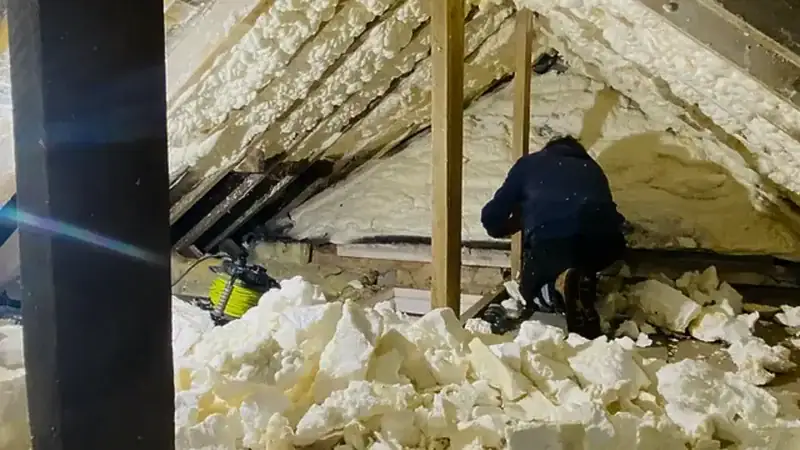
One of the biggest concerns surrounding spray foam insulation in the UK today is how it may affect roof ventilation and timber condition over time.
Many homeowners are now being advised to better understand the condition of their loft space — particularly if spray foam insulation has been applied directly to the underside of the roof.
As surveyors and mortgage lenders continue to increase checks on properties containing spray foam insulation, roof ventilation has become a major topic of discussion.
Spray foam in the UK — the key numbers
Who will lend where spray foam was retrofitted?
Sources: House of Commons Library briefing CBP-10658 · PCA & HomeOwners Alliance joint letter (May 2025) · BBC research (Nov 2024) — full detail on our spray foam statistics page.
Why Roof Ventilation Is So Important
A roof space needs airflow to help regulate:
- Moisture levels
- Condensation
- Temperature changes
- Timber condition
Proper ventilation allows damp air to escape and helps reduce the risk of moisture becoming trapped within the roof structure.
If airflow becomes restricted, moisture may build up over time, potentially increasing the risk of:
- Condensation problems
- Damp conditions
- Timber deterioration
- Hidden structural defects
This is one reason why surveyors are paying closer attention to loft spaces containing spray foam insulation.
Why Surveyors Are Raising Concerns
During surveys or mortgage valuations, professionals may assess:
- Whether roof timbers remain visible
- Signs of trapped moisture
- Ventilation pathways
- General loft condition
- Access for inspection purposes
Because spray foam insulation can cover parts of the roof structure, it may sometimes limit the ability to fully inspect the condition of the roof.
This can lead to additional questions or recommendations for specialist reports.
Talk it through with a free, independent adviser — no obligation, and we carry out no removals ourselves.
Are All Spray Foam Installations the Same?
No — every installation is different.
The level of concern may depend on:
- Open-cell or closed-cell foam
- Age of the installation
- Roof design and structure
- Existing ventilation systems
- Installation quality
- Overall property condition
Some properties may show no immediate signs of issues, while others may require further assessment.
This is why homeowners are increasingly being encouraged to understand the latest guidance surrounding spray foam insulation and roof ventilation.
Why Homeowners Should Stay Informed
Many homeowners only discover ventilation concerns when:
- Selling a property
- Applying for a mortgage
- Arranging a remortgage
- Receiving a survey report
Unfortunately, this often happens late in the process when delays and stress become more difficult to manage.
Understanding the situation early can help homeowners make more informed decisions about their property and avoid unexpected surprises later.
What Should Homeowners Do Next?
If your property already contains spray foam insulation, it may be sensible to:
- Review loft ventilation
- Understand what surveyors may assess
- Stay informed about lender guidance
- Seek professional advice if concerns are raised
The most important step is understanding how current UK guidance may apply to your property.
Download the Latest UK Spray Foam Guidance
Our free homeowner guidance report explains:
- Roof ventilation concerns
- Mortgage lender considerations
- Survey and valuation issues
- Common homeowner questions
- Practical next steps and advice
If you already have spray foam insulation installed, staying informed could help protect your property, mortgage options, and future saleability.
Worried about spray foam problems in your home? Call us free on 0800 494 7163 or leave a message about your situation and we will give you the advice you need to resolve it — and a full understanding of the guidance around spray foam and how it applies to your home. We are a free, independent advisory service and we carry out no removals ourselves.
Related guidance
- what spray foam removal actually costs — 2026 price ranges by property size, foam type and roof access.
- compare quotes from vetted removal specialists — Free, no obligation, and your details go to nobody until you choose.
Dealing with spray foam in your own home?
Talk it through with an independent advisor first — free, no obligation, and in many cases removal isn’t even needed.
Get Free Advice →Call Free: 0800 494 7163
Helpful guides: what removal costs · selling with spray foam · real homeowner cases