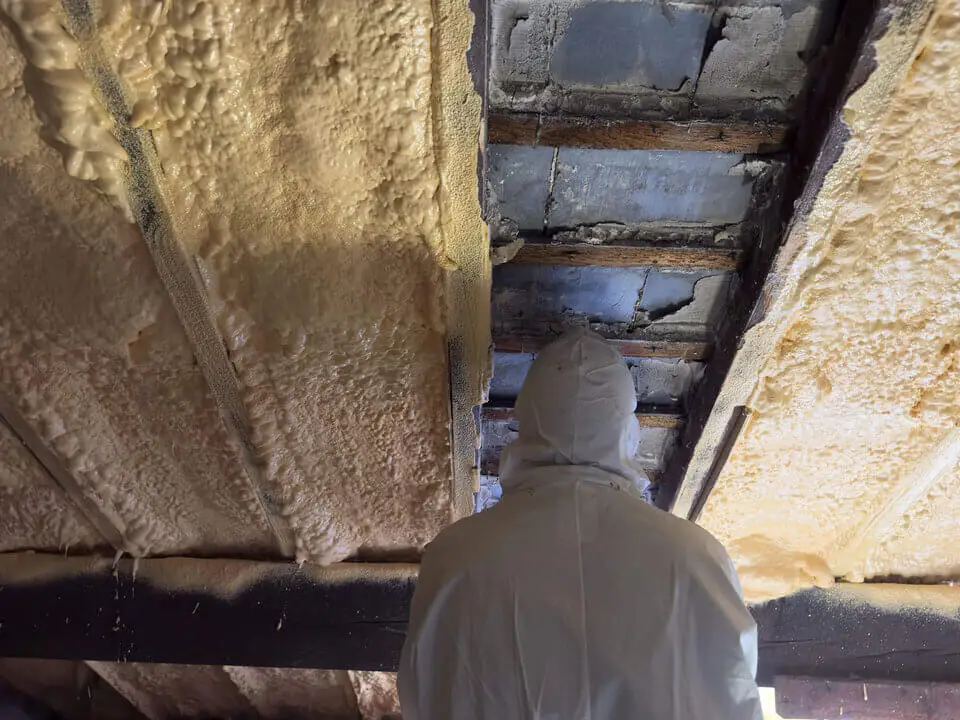
If you’re searching for spray foam removal cost in the UK, there’s a good chance you’ve already hit a problem: a buyer’s surveyor has flagged the foam in your loft, a lender has refused your mortgage, or your house sale has stalled at the last minute. You’re not alone, and the good news is that it’s fixable. This guide breaks down exactly what spray foam removal costs in 2026, what affects the price, and why acting quickly protects both your home and your sale.
How much does spray foam removal cost in the UK?
As a rough guide for 2026, professional spray foam insulation removal typically costs between £50 and £85 per square metre, depending on the type of foam and how difficult the job is. For most homeowners, that works out to:
- Small loft (terraced home): around £3,500–£5,000
- Medium loft (semi-detached): around £4,000–£6,000
- Large or complex roof (detached / difficult access): £8,000–£14,000+
Open-cell foam is softer and quicker to remove, so it sits at the lower end. Closed-cell foam is denser, bonds harder to the timbers and felt, and pushes the price up. In the most serious cases — where the foam has been sprayed directly onto the roofing felt and a full re-roof is needed — costs can climb to £12,000 or more.
Worth remembering: removal usually costs a fraction of the £10,000–£30,000 you could face if trapped moisture is left to rot your roof timbers. It’s almost always the cheapest way to protect your home’s value.
What affects the cost of removing spray foam insulation?
No two roofs are the same, so most reputable specialists give a tailored quote based on your foam type, roof size and access rather than a flat rate. The main price factors are:
- Foam type and thickness — closed-cell and thick layers take longer to remove.
- Roof or loft size — more square metres means more labour and disposal.
- Access — tight or awkward lofts slow the job down.
- Condition of the timbers — if the wood underneath is damaged, remedial work adds to the bill.
- Disposal — spray foam is often treated as controlled waste and must go to a licensed facility.
- Re-insulation — replacing the foam with lender-approved materials (like mineral wool) is usually a separate, modest cost.
Why do you need to remove spray foam insulation?
Spray foam was sold to thousands of UK homeowners as an energy-saving upgrade. The problem is what it does to a property sale or mortgage application years later.
Mortgage and remortgage refusals
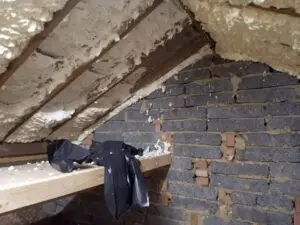
This is the big one. Lenders including TSB, Halifax, Nationwide, Skipton and Leeds Building Society — and 50+ others — now flag or refuse mortgages on homes with spray foam in the loft. The reason is simple: surveyors can’t see the roof timbers through the foam, so they can’t confirm there’s no hidden rot or damage. No visibility means unquantifiable risk, and lenders won’t take it on.
Failed and delayed property sales
Buyers’ surveyors are trained to spot spray foam instantly. Even with no history of leaks, the risk alone is often enough for a buyer’s lender to decline — which is how chains collapse at the eleventh hour. Homes with spray foam also take significantly longer to sell.
Blocked equity release
Planning to release equity from your home? Most equity release providers will decline outright if spray foam is present.
Hidden structural risk
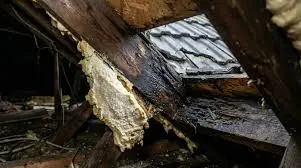
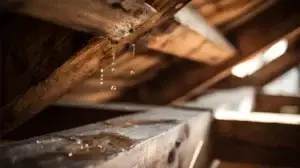
Spray foam can restrict the airflow a roof needs to breathe. That traps moisture against the rafters, and over time that can mean condensation and rot — exactly the damage a surveyor is worried they can’t see.
How is spray foam removed?
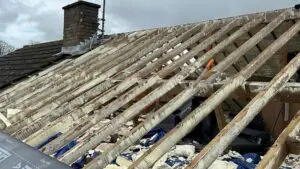
Professional removal is a specialist mechanical process — not a DIY job. A trained team uses purpose-built tools to cut, scrape and peel the foam away without damaging the rafters or roofing felt underneath. The typical process looks like this:
- Assessment and quote — confirming foam type, coverage and access.
- Mechanical removal — carefully stripping the foam to expose clean timber.
- Inspection — checking the now-visible timbers for moisture or damage.
- Waste disposal — removing foam to a licensed facility.
- Remedial work — repairing any damaged timber.
- Re-insulation and certification — fitting lender-approved insulation and issuing the documentation surveyors and lenders now expect.
That final certificate is the part that actually restores your mortgageability, so make sure any quote includes it.
Why you shouldn’t attempt DIY spray foam removal
It’s tempting to save money, but trade bodies strongly warn against it. DIY attempts commonly result in torn underlay, damaged tiles, and stubborn residue that surveyors still flag as a risk — meaning you pay twice. There are also real health hazards from the dust and chemicals involved. A partial or botched removal can leave a property with a zero valuation just the same as if nothing had been done.
How long does spray foam removal take?
Most jobs take two to five days. A small loft is often done in two to three days, while larger or more damaged roofs can take four to five days or longer. Your specialist should give you a realistic timeline before work begins.
Frequently asked questions
How much does spray foam removal cost in the UK? Most homeowners pay between £3,500 and £8,000 in 2026, with typical pricing of £50–£85 per square metre. Larger or more complex roofs can cost more.
Will removing spray foam fix my mortgage problem? In most cases, yes. Professional removal with a proper completion certificate restores the lender’s ability to inspect the timbers, which is what allows mortgage applications and sales to go ahead.
Can I remove spray foam myself? It’s strongly discouraged. Without the right tools and experience you risk damaging the roof, leaving residue that surveyors reject, and exposing yourself to harmful dust and chemicals.
Is partial removal enough? No. If a surveyor finds even small amounts of residue on the rafters, the property can still be given a zero valuation. A full, clean removal is needed.
Do I need planning permission to remove spray foam? Removal itself doesn’t usually need permission, but any work afterwards — re-insulation, timber repairs or re-roofing — must meet UK Building Regulations.
Do you need a survey first? No — and here’s why
It’s natural to want a survey before committing, but with spray foam in place a survey can’t tell you what actually matters. That’s the whole problem: once the foam is sprayed over the roof timbers, even a qualified surveyor can’t properly inspect the wood, take accurate moisture readings, or confirm the structure is sound. The foam hides exactly what needs to be seen.
In other words, paying for a survey before removal means paying someone to look at a roof they physically can’t assess. The sensible first step is removal itself — only once the foam is gone can the timbers be inspected, any repairs identified, and proper certification issued for your lender, buyer or surveyor.
So if spray foam is holding up your sale, mortgage or equity release, the fastest route forward is straightforward removal by a specialist. Our team provides fast, safe removal across the UK, full repairs, and the lender-accepted certification you need to get back on track.
SPEAK TO A ADVISOR ON 0800 4947163