











Spray foam in the UK — the key numbers
Who will lend where spray foam was retrofitted?
Wondering where you stand legally? Spray foam isn’t banned in the UK — but lender and surveyor caution is very real. Our guide explains the current rules and what they mean for your home.
Sources: House of Commons Library briefing CBP-10658 · PCA & HomeOwners Alliance joint letter (May 2025) · BBC research (Nov 2024) — full detail on our spray foam statistics page.
How to Identify Spray Foam Damage Before It Costs You Thousands
Spray foam insulation has become increasingly popular across the UK thanks to its energy-saving benefits and ability to improve home comfort. However, when installed incorrectly or used in unsuitable properties, spray foam can cause significant problems that may affect your home’s structure, ventilation, mortgage eligibility, and resale value.
Identifying potential spray foam damage early can save homeowners thousands of pounds in repairs and prevent more serious issues from developing. In this guide, we’ll explain the warning signs to look for and what steps you should take if you suspect a problem.
Why Spray Foam Insulation Can Become a Problem
Spray foam insulation is designed to create an airtight barrier that reduces heat loss. While this can improve energy efficiency, problems can arise when moisture becomes trapped within roof structures or when ventilation pathways are blocked.
In some cases, homeowners only discover issues when arranging a property survey, applying for a mortgage, or preparing to sell their home. By that point, remediation costs can be substantial.
Compare vetted loft spray foam removal quotes — free, no obligation, and you stay in control.
Common Signs of Spray Foam Damage
1. Damp or Moisture in the Loft
One of the earliest warning signs is the presence of moisture in your loft space. Check for:
- Damp patches on timber
- Water staining
- Condensation on roof timbers
- Musty smells
Spray foam can prevent natural airflow within the roof structure, allowing moisture to build up over time.
2. Timber Rot and Wood Decay
When moisture becomes trapped, roof timbers may begin to deteriorate. Signs include:
- Soft or spongy wood
- Discolouration
- Cracking or splitting timber
- Visible fungal growth
Timber rot can compromise the structural integrity of your roof and lead to expensive repairs if left untreated.
3. Mould Growth
Mould thrives in damp, poorly ventilated environments. Inspect your loft and upper floors for:
- Black, green, or white mould patches
- Persistent musty odours
- Increased allergy symptoms among occupants
Mould can affect both your property and your family’s health.
4. Roof Ventilation Issues
A healthy roof requires adequate airflow. Poorly installed spray foam may block ventilation routes, leading to:
- Excessive loft humidity
- Condensation build-up
- Overheating during warmer months
If your loft feels unusually humid or stale, it may indicate restricted airflow.
5. Difficulty Obtaining a Mortgage
Many UK lenders and surveyors take a cautious approach to properties with spray foam insulation, particularly when it has been applied directly to roof timbers.
You may encounter:
- Reduced property valuations
- Additional survey requirements
- Mortgage application delays
- Requests for insulation removal
This issue alone can significantly affect your property’s marketability.
How to Inspect Your Property
While a professional survey is always recommended, homeowners can carry out some basic checks:
Examine Roof Timbers
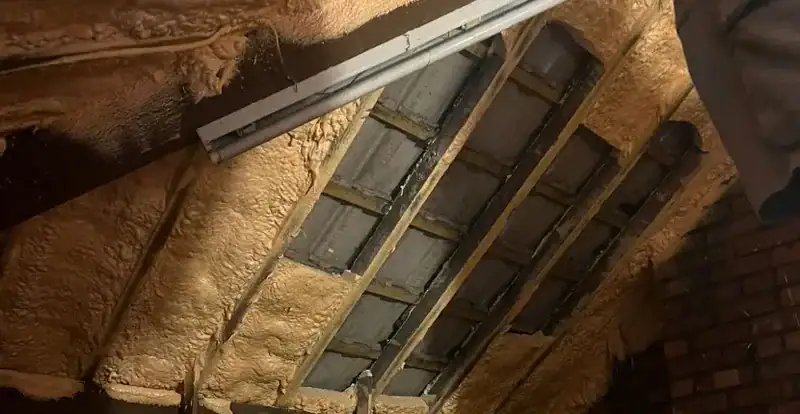
Use a torch to inspect visible roof timbers for signs of moisture, mould, or decay.
Check for Condensation
Look for water droplets, damp surfaces, or evidence of persistent moisture in the loft.
Review Installation Quality
Uneven application, gaps, excessive thickness, or foam covering ventilation openings may indicate poor installation practices.
Monitor Indoor Air Quality
Persistent damp smells, mould growth, or increased condensation on windows may point to underlying ventilation problems.
When to Call a Professional
If you notice any of the warning signs above, it’s important to seek expert advice. A qualified surveyor or spray foam specialist can assess:
- Moisture levels
- Roof timber condition
- Ventilation performance
- Potential structural risks
Early intervention can often prevent minor issues from becoming major repair projects.
The Cost of Ignoring Spray Foam Problems
Many homeowners postpone inspections because there are no obvious symptoms. Unfortunately, hidden damage can continue developing for years.
Potential costs may include:
- Timber replacement
- Roof repairs
- Mould remediation
- Spray foam removal
- Reduced property value
- Delays during property sales
What starts as a small moisture issue can quickly escalate into a multi-thousand-pound expense.
Spray Foam Problems — Quick Answers
What are the most common spray foam insulation problems?
Trapped condensation against the roof timbers, timber rot, mould growth, blocked roof ventilation and — the one that catches most people out — mortgage refusals when a surveyor cannot inspect the rafters. Most spray foam problems trace back to poor installation or a roof that was never suitable for foam in the first place.
Can spray foam problems be fixed without full removal?
Sometimes. Where the installation is documented and the timbers are accessible, improved ventilation or partial removal can be enough. But where the foam hides the rafters entirely, most lenders will only be satisfied once it is stripped and the roof professionally documented — see our guide to loft spray foam removal and vetted loft spray foam removal companies.
Who should I call about spray foam problems?
An independent adviser before a removal salesman. Diagnosing spray foam problems over the phone is guesswork, and doorstep callers have an incentive to find them. We are a free advisory service, we carry out no removals ourselves, and you can call us on 0800 494 7163.
Protect Your Home and Your Investment
Spray foam insulation isn’t always problematic, but regular inspections are essential for protecting your property. Catching moisture issues, timber decay, or ventilation problems early can save significant time, stress, and money.
If your home has spray foam insulation installed, consider arranging a professional assessment—especially if you’re planning to sell, remortgage, or have concerns about your roof’s condition.
A proactive inspection today could prevent costly surprises tomorrow.
Worried about spray foam problems in your home? Call us free on 0800 494 7163 or leave a message about your situation and we will give you the advice you need to resolve it — and a full understanding of the guidance around spray foam and how it applies to your home. We are a free, independent advisory service and we carry out no removals ourselves.
Related guidance
- what spray foam removal actually costs — 2026 price ranges by property size, foam type and roof access.
- compare quotes from vetted removal specialists — Free, no obligation, and your details go to nobody until you choose.
Dealing with spray foam in your own home?
Talk it through with an independent advisor first — free, no obligation, and in many cases removal isn’t even needed.
Get Free Advice →Call Free: 0800 494 7163
Helpful guides: what removal costs · selling with spray foam · real homeowner cases